
Previously in this series: Part 2: Between a Rock and a Hard Place
This Isn't in My Head
What Living With Complex, Invisible Illness Actually Looks Like
If my health could be explained by one diagnosis, perhaps all of this would be easier to understand.
It can't.
My body doesn't fit neatly into one specialty, one organ system or one fifteen-minute doctor's appointment.
Over the years, I've accumulated diagnoses, injuries, and complications affecting almost every system of my body.
But before I give you the list, I want to explain the thing that probably affects my ability to function more than any list can communicate.
The Headaches That Take Me Down
My cervicogenic headaches are probably the single most debilitating thing I live with—and I live with a headache every day. The question is usually not whether I have a headache, but how severe it is at any given time. Sometimes the worst stretches last for days.
Calling them “headaches” is inadequate because people hear that word and naturally compare it with headaches they've experienced. Mine originate from serious problems in my neck, and when the pain becomes severe, it can take away my ability to function.
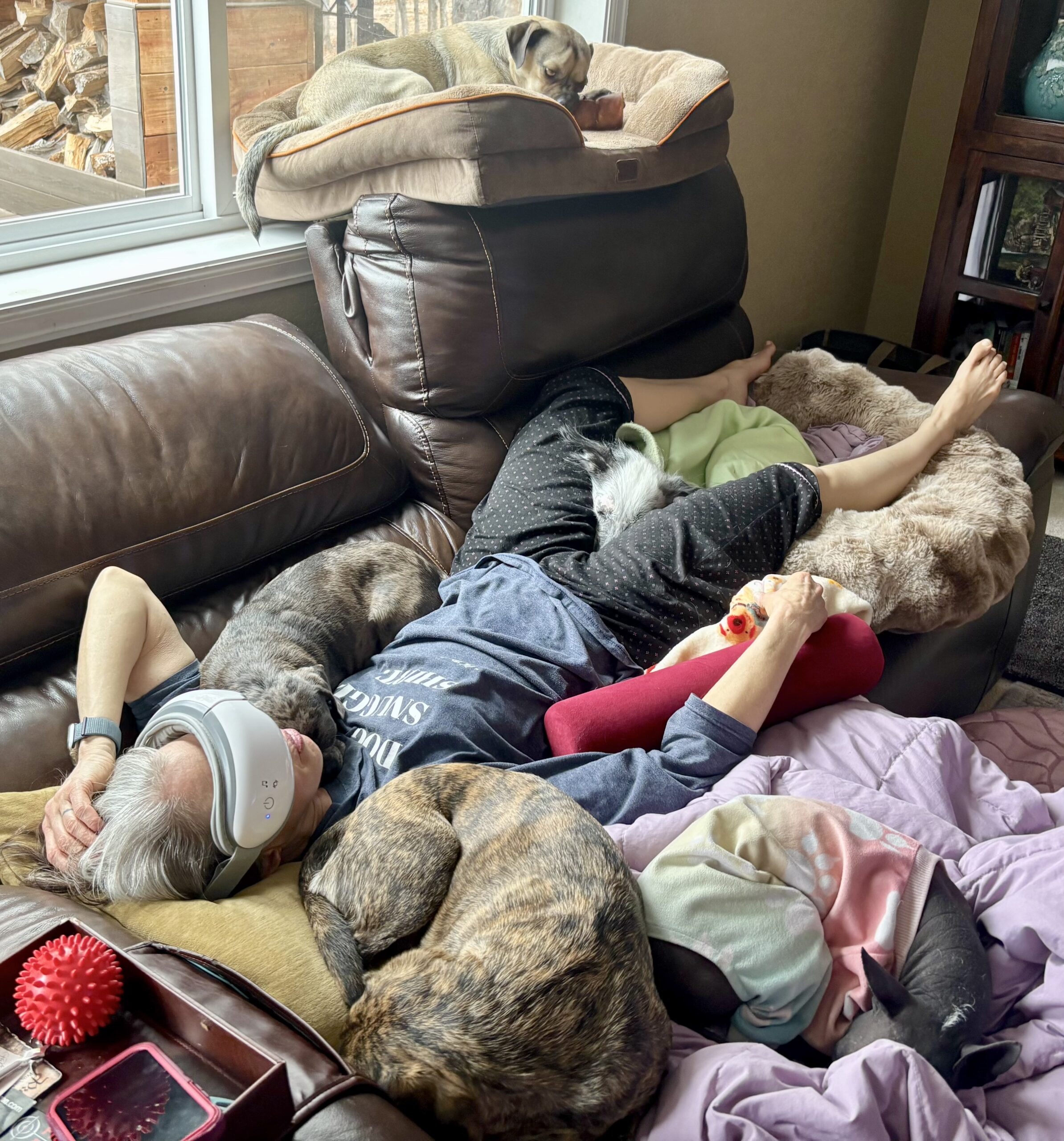
The pain itself is exhausting. My concentration disappears. Thinking becomes difficult. My energy crashes. Sometimes all I can do is lie down and wait for the intensity to become more manageable.
But the headaches are only one part of what can take me down. My other health problems can flare with them or completely independently of them. I can have overwhelming fatigue, deep bone and joint pain, neurological symptoms, dizziness, weakness, brain fog , and other symptoms even when my headache isn't at its worst.
Some days one thing is screaming the loudest. Other days several things screamonce.
So when I say I can't think clearly enough to answer someone, can't keep plans, can't work on my website, can't run an errand or simply need to lie down, there isn't always one neat explanation.
Sometimes I'm simply trying to exist inside a body that hurts and doesn't function the way I need it to.
The Bigger Medical Picture
The headaches aren't happening in isolation.
My medical history includes Mast Cell Activation Syndrome (MCAS), Hashimoto's, thyroid disease, Ehlers-Danlos syndrome, orthostatic intolerance bordering on POTS, polyneuropathy, migraines, SIBO, Candida, hypoglycemia, and osteopenia.
I've had neck surgery and continue to live with significant cervical problems, including degenerative disc disease and two bad facet joints. I've had multiple shoulder surgeries and continue to have shoulder problems, including a current torn rotator cuff.
Then there are the other pieces: deep bone and joint pain, chronic cough, sinus problems, swallowing and choking problems, dry mouth, mouth sores, cracked teeth, implants, seven gum-grafting surgeries, and significant dry-eye and vision problems. I've had tear duct plugs, and when that didn't work, I had them cauterized closed (which is now another medical issue).
I've dealt with major hormonal problems as well, including being medically pushed into menopause at 36 after a severe and rare reaction during infertility treatment.
And I'm probably forgetting something.
After enough years of this, medical history becomes its own filing cabinet.
Everyone Gets a Shard
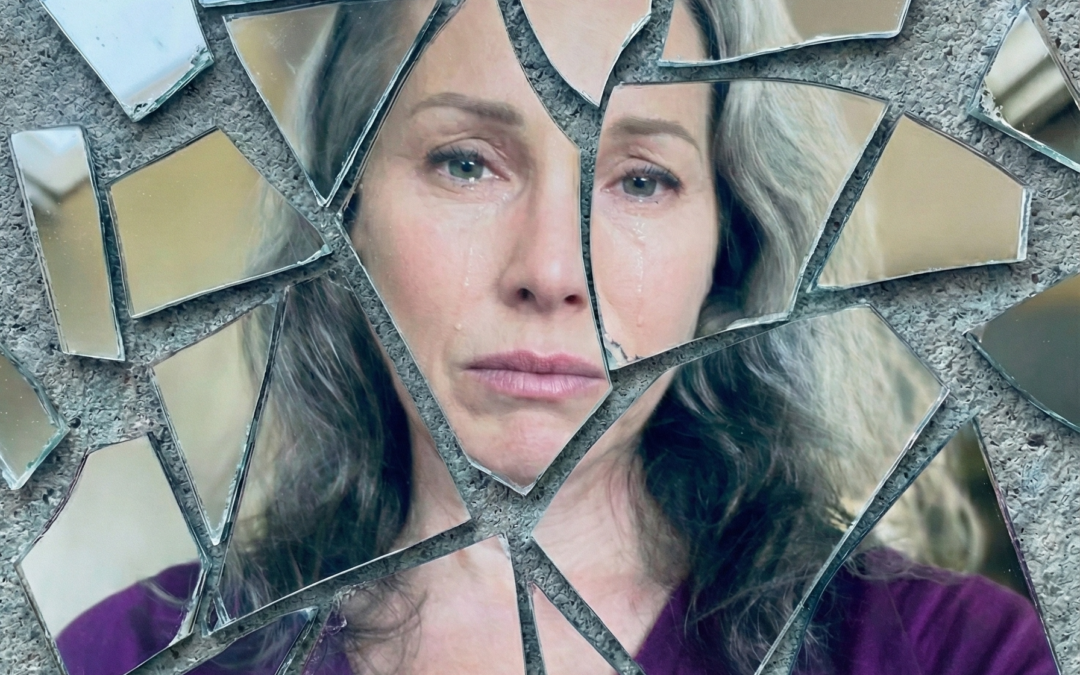
The shattered-mirror image feels strangely appropriate because healthcare has often felt like standing in front of a broken mirror while different people examine different pieces.
One doctor gets the neck. Another gets the nervous system. Another gets the immune system. Another gets the gut. Another gets the eyes. Another gets the mouth. Another gets the hormones.
Everyone may be looking at something real.
And I'm still standing there wondering:
Does anyone see the whole person?
That's part of why simple solutions can become complicated.
“Have You Tried...?”
I want to be careful with this because I never want people who care about me to think they shouldn't share something that might genuinely help.
I appreciate thoughtful advice.
If a friend reads research and thinks of me, that matters. If someone knows a practitioner who helped them, I'll listen. If someone tells me about something I've never encountered, I may investigate it.
You never know where the useful piece of information might come from.
But there's another reality.
Managing complicated chronic illness can feel like a full-time job performed by someone who is too sick to work a full-time job.
Researching. Reading. Making appointments. Getting referrals. Fighting insurance. Trying treatments. Managing medications. Tracking symptoms. Looking at interactions. Getting second opinions. Trying to understand which condition is contributing to which symptom.
Every new suggestion can become another research project.
So if you send me something and I don't immediately investigate it, please don't mistake that for ingratitude.
Sometimes I simply don't have enough brain left.
So please keep sharing something with me if you genuinely think it could help. I appreciate the care behind it, and sometimes a suggestion really may lead me somewhere useful.
Just understand that by the time it reaches me, it's being added to eleven years of doctors, treatments, research, procedures, medications, therapies, and things I've already tried.
There is so much more to my medical history than most people ever see.
Please Don't Tell Me to Think Myself Healthy
I believe mindset matters. I believe our emotional lives can affect our physical lives. I believe stress matters. I believe in prayer.
And obviously, I believe in energy healing. It's part of what I do.
But I absolutely do not believe that means every illness or injury can be cured by thinking correctly.
A positive attitude does not repair a torn rotator cuff. Gratitude does not suddenly heal damaged joints. Prayer does not mean structural problems in my neck cease to exist. Processing emotional trauma does not guarantee autoimmune disease disappears.
One of the things I cannot stand is the endless stream of messages suggesting that if we just think healthy thoughts, choose happiness, raise our vibration, manifest correctly or decide we're healed, our bodies will obediently follow.
Sometimes bodies are injured.
Sometimes people are sick.
Sometimes medicine doesn't have an easy answer.
And telling a chronically ill person that their thoughts create their physical reality carries a nasty implication:
If you're still sick, maybe you're doing healing wrong.
No.
I can be grateful and angry. Hopeful and exhausted. Faithful and confused. Emotionally healthy and physically sick.
Those things can exist in the same person.
I Don't Need an Explanation for It to Be Real
For years, I sometimes wondered whether maybe I was exaggerating. Whether I wasn't trying hard enough. Whether somehow I should be able to think, work or heal my way out of this.
I can't.
I don't have one neat explanation for why my health became what it is. I don't know why some things happened when they did or why my body never fully recovered from others.
But I no longer need to solve every piece of that puzzle before I'm allowed to trust my own experience.
The illnesses are real.
The injuries are real.
The pain is real.
And wanting desperately for them not to be has never made them disappear.
Next in Writing From the Couch
Part 4: Recluse Felt Safer Than Unreliable
What Chronic Illness Has Done to My Friendships—and Why I Sometimes Disappear
Related Articles in This Series
[Part 1 Where I've Been— The Life You Didn't See]
[Part 2 Between a Rock and a Hard Place — Grieving the Life—and the Person—I Used to Be]
[Part 3 This Isn't in My Head — What Living With Complex, Invisible Illness Actually Looks Like]
[Part 4: Recluse Felt Safer Than Unreliable — What Chronic Illness Has Done to My Friendships—and Why I Sometimes Disappear]
[Part 5: I Found My Purpose. I'm Still Sick. — What Purpose, Faith, Work, and Chronic Illness Look Like When There Isn't a Neat Ending — Coming Soon]
Medical note: This article describes my personal health history and lived experience and is not intended as medical advice.