
🎃 A Pet Owner’s Guide to a Safe and Spooky Halloween
Halloween is a favorite holiday for many, filled with fun costumes, spooky decorations, and mountains of candy. But for our furry family members, this festive night can be genuinely frightening and fraught with hidden dangers.
From toxic treats to stressful strangers, Halloween poses unique risks to cats and dogs. As a pet owner, a little preparation is all it takes to ensure the holiday is safe and stress-free for everyone.
Here are the essential Halloween safety tips to protect your pet.

1. Keep the Treats for Trick-or-Treaters (Not Pets)
That bowl of Halloween candy is a major hazard for your pets. Many popular treats are toxic, and even the wrappers can cause serious problems.
- Chocolate: All chocolate is toxic to dogs and cats, but dark chocolate and baking chocolate are the most dangerous. It contains theobromine, which can cause vomiting, diarrhea, rapid heart rate, and even seizures.
- Xylitol: This sugar substitute is found in many sugar-free candies, gums, and baked goods. It is extremely toxic to dogs and can cause a rapid, life-threatening drop in blood sugar (hypoglycemia) and liver failure.
- Raisins: While some people hand out small boxes of raisins, these are highly toxic to dogs and can cause acute kidney failure.
- Candy Wrappers: A pet scarfing down candy isn’t likely to unwrap it first. Foil and plastic wrappers can cause choking or a dangerous intestinal blockage that may require surgery.
Safety Tip: Keep all candy in a high cabinet or a sealed container, well out of your pet’s reach. Remind children that candy is not for sharing with their furry friends.

2. Make Costumes Safe and Comfortable (Not Scary)
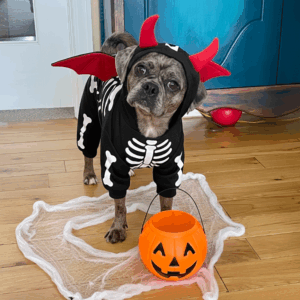
While a pet in a costume can be adorable, their comfort and safety must come first.
- Check for Comfort: The costume should never restrict your pet’s movement, sight, hearing, or ability to breathe or pant. If a pet shows signs of stress (tucking their tail, pinning their ears, or trying to remove the costume), take it off.
- Avoid Choking Hazards: Inspect the costume for any dangling pieces, buttons, or small parts that your pet could easily chew off and swallow.
- Do a Test Run: Have your pet wear the costume for short periods before Halloween. This helps them get used to it and allows you to spot any potential issues.
- Never Leave Them Unattended: A pet in a costume should always be supervised. They could get tangled in the outfit or caught on furniture.
Safety Tip: If your pet hates costumes, don’t force it. A festive bandana or a Halloween-themed collar is a perfectly safe and cute alternative.
3. Pet-Proof Your Spooky Decorations
Your spooky decor might be intriguing—or terrifying—to your pet.
- Beware of Flames: A wagging tail or a curious cat can easily knock over a lit pumpkin or candle, posing a serious fire hazard and a burn risk. Opt for battery-operated, flameless candles instead.
- Secure Electrical Cords: T-light-up decorations often mean extra cords. Tape them down or hide them to prevent your pet from chewing on a live wire.
- Glow Sticks are Not Toys: While most glow sticks are labeled non-toxic, the liquid inside has a terribly bitter taste. A pet that bites one will likely drool excessively, paw at their mouth, and act strangely.
- Fake Cobwebs: These can be a tangling hazard for cats and other small animals if they try to walk or climb through them.
Safety Tip: Place all decorations well out of your pet’s reach.

4. Manage Doorbell Anxiety and Escape Risks
For many pets, the scariest part of Halloween is the constant stream of strangers in scary masks ringing the doorbell. This chaos can cause significant anxiety and increase the risk of an accidental escape.
- Create a “Safe Haven”: Set your pet up in a quiet, secure room away from the front door. Close the door and provide them with their bed, favorite toys, water, and a treat-dispensing puzzle to keep them busy.
- Mask the Noise: Play calming classical music or turn on the TV in their safe room to help muffle the sound of the doorbell and excited shouts.
- Update Their ID: This is the most important tip. Before the night begins, double-check that your pet is wearing a collar with up-to-date ID tags. Ensure their microchip information is correct, just in case the unthinkable happens and they dash out the door.
- Keep Pets Indoors: Even if you have an outdoor cat, bring them inside several hours before trick-or-treating begins to keep them safe from pranksters and cars.
By taking these simple precautions, you can ensure your pet stays safe, calm, and comfortable, allowing the whole family to enjoy a happy Halloween.
 Rikono Ltd